Teaching a kid to ride a bike is often a stressful rite of passage filled with scraped knees, tears, and parents running down the sidewalk holding onto a bike seat. With three kids ages 3, 5, and 8, we are officially in the thick of the bike-learning years at our house!
If you’ve been researching kids’ bikes to avoid the typical training-wheel struggles, you’ve probably heard of Guardian Bikes.
Famous for landing a deal with Mark Cuban on Shark Tank, Guardian claims to have built the “world’s safest” and easiest-to-learn kids’ bike. But do they actually live up to the hype? After digging into the specs, the safety tech, and how kids actually ride them, here is the full breakdown of why Guardian Bikes are shaking up the neighborhood sidewalks.
My first-hand experience with Guardian Bikes
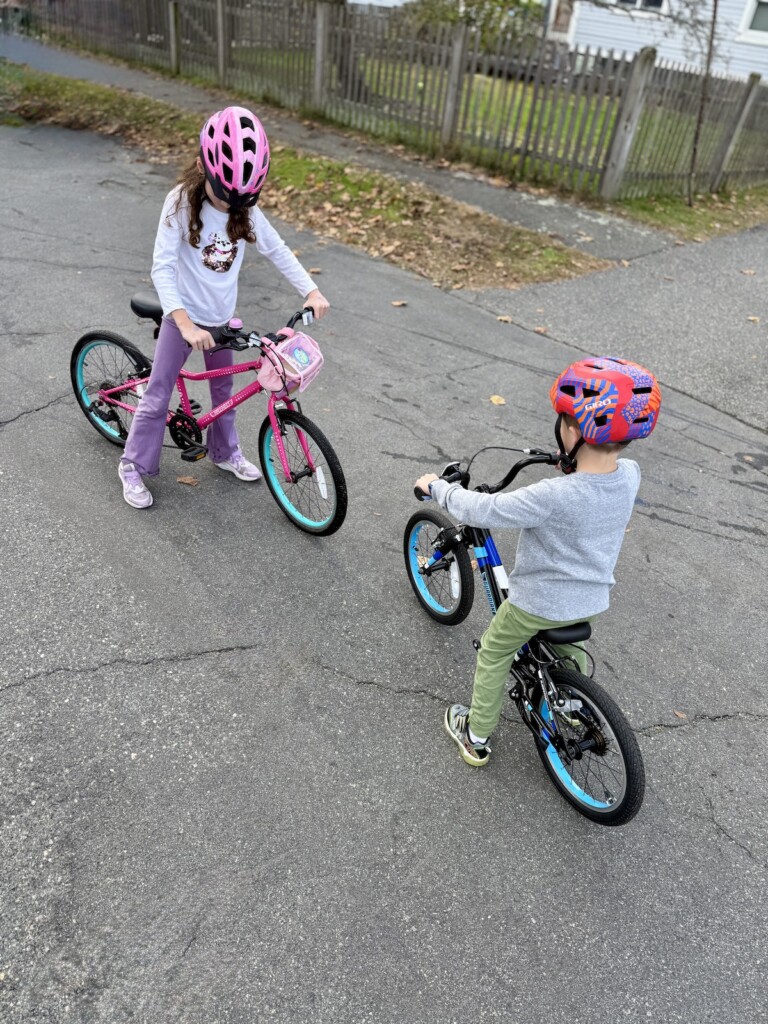
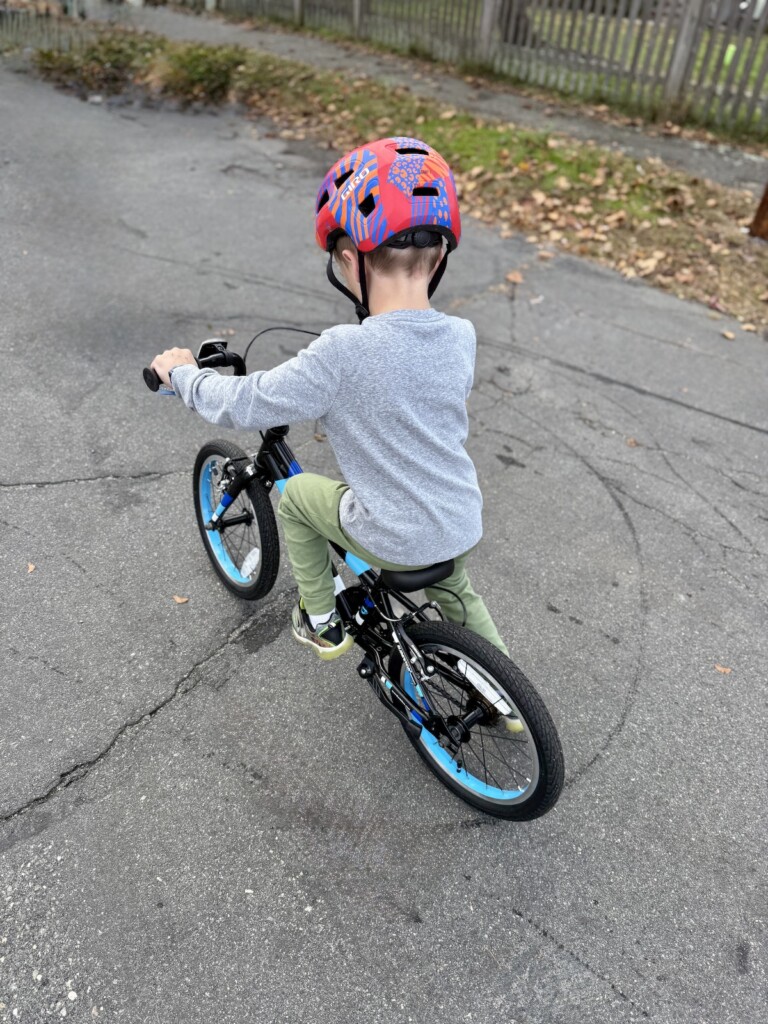
Our oldest started learning to ride a bike at age 4 with the typical training wheels, but she fell off and scraped her knees pretty badly. It took years to get her back on a bike after that! I thought we would try the Guardian, because it was the only taller bike I could find that you could use as a balance bike first. Within 2 weeks of using the Guardian as a balance bike, we put on the pedals and she was off. She hasn’t looked back since!
When it was time to get a bike for our middle, I immediately went to Guardian to get him one of their bikes.
What Makes Guardian Bikes Different?
Most kids’ bikes on the market are heavy, clunky, and come with confusing coaster brakes (where you have to pedal backward to stop). Guardian completely redesigned the bike from a child’s perspective, focusing on three major innovations.
1. The SureStop Braking System (The Game Changer)
This is the single biggest reason parents buy a Guardian bike. Instead of having two separate hand levers for the front and back tires—or a frustrating back-pedal brake—Guardian uses their patented SureStop system.
There is only one hand lever. When your child squeezes it, the system intelligently distributes the braking power to both the rear and front wheels simultaneously.
- No flipping over the handlebars: If a child stops suddenly, traditional front brakes can lock up and send them flying. SureStop prevents the front wheel from locking if the rear wheel lifts off the ground.
- No confusion: In a panic, kids don’t have to remember which hand to squeeze. They just squeeze the single lever, and the bike stops smoothly and quickly.
2. Extremely Lightweight Frames
A major mistake parents make is buying a bike from a big-box store that weighs almost as much as their child. A heavy bike is incredibly hard to balance and pedal.
Guardian Bikes are significantly lighter than standard bikes. They offer two frame options:
- The Airos: Their premium, ultra-lightweight aluminum frame.
- The Ethos: Their more budget-friendly steel frame, which is slightly heavier than the Airos but still a massive upgrade (weighing at least 5 lbs less than typical department store bikes).
3. Kid-Specific Geometry
Guardian bikes sit lower to the ground and have a wider wheelbase. This lowers the child’s center of gravity, making the bike instantly feel more stable. They also feature a steering limiter, which prevents the handlebars from spinning a full 360 degrees. This stops the bike from jack-knifing during sharp turns and helps kids maintain control when they are just learning to steer.
The Guardian “Learn to Ride” Method
Guardian actively discourages training wheels (though their bikes are compatible with them). Instead, they designed these bikes to be used as balance bikes first.
Because the frame is light and the center of gravity is low, you can leave the pedals off when the bike arrives. Let your youngest push around with their feet and learn to balance and use the hand brake. Once they can glide confidently without their feet touching the ground, you simply screw the pedals on. Parents consistently report that kids transition to full pedaling in a single afternoon using this method.
Features for Older Kids
If you are buying for an older elementary kid, Guardian’s larger models (20-inch, 24-inch, and 26-inch) introduce gears in a brilliant way. They use a Microshift 7-speed twist shifter that features a “Visual Identifier.” Instead of just numbers, the shifter shows a tortoise for easy/slow pedaling (hills) and a hare for fast pedaling (flat stretches). It makes learning how to shift gears incredibly intuitive for an 8-year-old.
Pros and Cons
The Pros:
- Unmatched safety: The SureStop brake is revolutionary for preventing accidents.
- Confidence builder: The lightweight design and low step-over height mean fewer falls.
- High resale value: Because of their reputation and durability, you can often resell these for a great price when your child outgrows them.
- Easy assembly: They arrive 95% assembled with all the tools you need.
The Cons:
- The Price: Starting around $279 for the smallest Ethos and going up to $479+ for the larger Airos models, they are an investment. See prices on different models at the Guardian Bikes site >>
- No coaster brake: If your child is heavily reliant on a back-pedal brake from a previous bike, there might be a one-day learning curve to adjust to the hand brake.
- Not a true mountain bike: While great for pavement, dirt paths, and grass, the tires and lack of suspension mean they aren’t meant for intense, rocky mountain bike trails.
The Verdict: Is it the best bike for little kids?
If it fits your budget, yes.
The combination of the SureStop braking system and the lightweight frame removes almost all the frustration from learning to ride. By eliminating the fear of stopping and the physical struggle of pedaling a heavy frame, kids gain confidence incredibly fast. Guardian Bikes aren’t just selling a bicycle; they are selling peace of mind for parents and a much faster track to independent riding for kids.

Leave a Reply